Riding the Wave Until It Crashes: The Dangerous Illusion of the Reverse Martingale
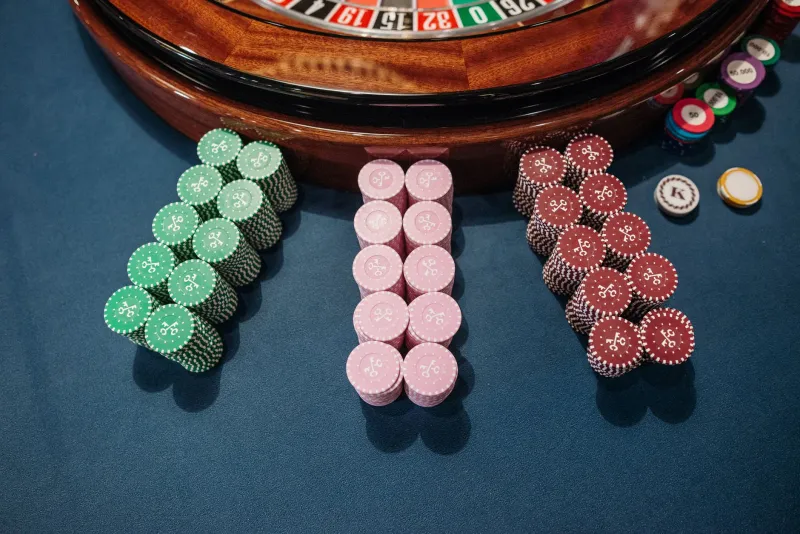
There's something almost poetic about the idea of letting your winnings do the heavy lifting. You hit a few good hands, double up your bet, hit again, double again — and suddenly you're stacking chips like you've cracked the code. That's the seductive pitch behind the reverse Martingale, also called the Paroli system. And casinos? They absolutely love it when players buy in.
Here's the thing nobody tells you upfront: the house doesn't need to trick you into playing this system. You'll talk yourself into it all on your own.
What Exactly Is the Reverse Martingale?
The classic Martingale strategy — the one your uncle swears works at the blackjack table — tells you to double your bet after every loss. The reverse Martingale flips that script. Instead of chasing losses, you double your bet after every win. The logic sounds almost reasonable: you're playing with house money, right? If you lose, you only lose your original stake. If you keep winning, you're compounding someone else's cash.
In practice, most players set a "stop" after three or four consecutive wins, pocket the profits, and reset to their base bet. On paper, it looks disciplined. In reality, it's one of the sneakiest psychological traps in the betting world.
The Brain Chemistry Behind the Bet
Human brains are wired to find patterns. After two or three wins in a row, your mind starts constructing a narrative — I'm on fire, the momentum is real, this is my night. Neuroscience backs this up: winning triggers dopamine releases that genuinely alter your risk perception. You start feeling invincible at exactly the moment you should be pumping the brakes.
This is what psychologists call the "hot hand fallacy" — the deeply human belief that a winning streak signals future success. It's the same thinking that has people convinced a slot machine is "due" after a cold spell, or that a roulette wheel has a personality. Casinos are designed, both physically and structurally, to amplify this feeling. The lights, the sounds, the pace of play — it all conspires to keep you in that elevated emotional state where doubling up feels like the obvious move.
The reverse Martingale is particularly dangerous because it feels responsible. You're not chasing losses. You're not throwing good money after bad. You're just riding momentum. That sense of control is entirely manufactured, and it's the dealer's best friend.
The Math Doesn't Care About Your Streak
Let's strip away the emotion and look at the numbers. Say you're playing roulette — American roulette, which carries a house edge of 5.26%. Each spin of the wheel is an independent event. The outcome of spin six has absolutely zero relationship to the outcomes of spins one through five. The wheel doesn't have memory. The cards don't know you're on a roll.
When you double your bet after a win under the reverse Martingale, you're not reducing variance — you're concentrating it. Here's a simple scenario: you start with a $10 base bet and plan to double for three consecutive wins before resetting.
- Win 1: $10 bet → win $10, now bet $20
- Win 2: $20 bet → win $20, now bet $40
- Win 3: $40 bet → win $40, pocket $70 profit, reset to $10
Sounds great. But what happens if you lose on that third bet? You walk away with a net of zero on three rounds of play — you've won twice and broken even. Worse, the longer your intended streak, the more your final bet dwarfs everything that came before it. By bet four or five, you're risking more than you've won in all previous rounds combined. One bad spin erases the entire sequence.
And statistically, that bad spin is always coming. On a 50/50 proposition (closer to 47.37% on an American roulette even-money bet), the probability of hitting four wins in a row is roughly 8%. That's not impossible — but it means the losing outcome happens nine times out of ten.
Where Even Experienced Bettors Get Burned
This isn't just a beginner's mistake. Plenty of seasoned sports bettors and table game regulars fall into the reverse Martingale trap, especially during a live session when emotions are running high. The system has a built-in excuse mechanism: if you lose, you tell yourself you just didn't exit at the right moment. Next time, you'll stop at three wins instead of four. Or maybe five. The goalposts keep moving.
There's also a real-world complication that theory ignores: table limits. Most casinos cap their maximum bet, which means even if the math somehow worked in your favor during a long streak, the house has already built a ceiling into the system. You can't double indefinitely even if you wanted to.
Sports bettors face a parallel version of this trap when they parlay winnings across multiple legs of a bet. Each leg feels like free money. But the more legs you add, the more the juice compounds against you — and a single loss collapses the entire structure.
Playing Bold Without Playing Blind
At Breed77, we're all about playing bold — but bold doesn't mean reckless, and it definitely doesn't mean handing the casino a psychological edge on top of a mathematical one. The reverse Martingale isn't a system so much as a way to feel good about escalating risk. That's a subtle but critical distinction.
If you're going to use progressive betting at all, go in with eyes wide open. Decide your stop-win point before you sit down, not mid-session when your brain is flooded with dopamine. Treat each bet as the independent event it actually is. And never mistake a winning streak for a skill advantage in a game of chance.
The smartest thing you can do after a few wins? Pocket a fixed percentage — say, half — and play the rest. That way, no matter what happens next, you're leaving with something real instead of a story about the streak that got away.
The Bottom Line
The reverse Martingale is seductive precisely because it disguises risk as discipline. It takes the raw thrill of a winning streak and wraps it in just enough structure to feel like a strategy. But the house edge doesn't pause while you're on a roll, and variance doesn't negotiate.
Casinos don't need to ban this system. They just need to wait. The math will handle the rest — and it always does.