Rigged in Plain Sight: The Math Behind Casino Games That's Quietly Emptying Your Bankroll
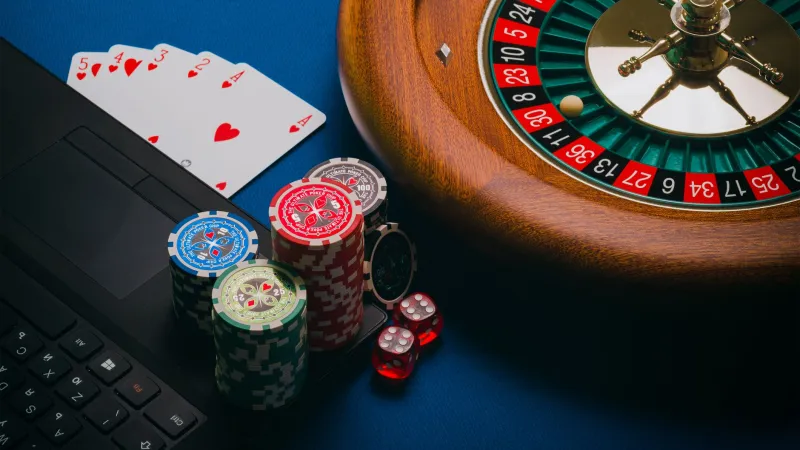
Let's get one thing straight before we go any further: the casino is not your friend. That doesn't mean you can't win — plenty of people do, every single day. But the house isn't running a charity, and every game on that floor (or on that screen) was designed with one goal in mind: to take more money than it gives back over time.
That's the house edge. And if you don't understand it, you're not really playing — you're just donating.
At Breed77, we're all about playing bold and playing smart. That means knowing exactly what you're walking into before you place a single bet.
What the House Edge Actually Means
Strip away the flashing lights and the cocktail waitresses, and what you've got is a percentage. The house edge is the mathematical advantage a casino holds over the player on any given game, expressed as a percentage of each bet you make. Over thousands of hands, spins, or rolls, that percentage grinds your bankroll down like sandpaper.
A house edge of 5% doesn't mean you lose 5 cents every time you bet a dollar. It means that on average, over time, the casino keeps 5 cents of every dollar wagered. In the short run, you can absolutely be up big. But the longer you play, the more that percentage asserts itself — and the house has all the time in the world.
This is why "I was up $500 and then lost it all" is one of the most common stories in gambling. The math isn't personal. It's just patient.
The Slot Machine Trap
Slots are the biggest revenue generators in virtually every casino in America, from the Vegas Strip to your favorite online platform. They're also, almost universally, the worst bet you can make.
The house edge on slot machines typically ranges from 2% to 15%, depending on the machine and the platform. But here's the kicker — you often have no idea which end of that range you're on. Online slots are required to publish their RTP (Return to Player) percentages in most regulated markets, and that's your inverse indicator. A slot with 94% RTP has a 6% house edge. Sounds manageable, right?
Now factor in speed. Slots are designed to be fast. You can easily spin 400–600 times per hour. At $1 a spin, that's $400–$600 wagered per hour, with 6% of it evaporating on average. That's $24–$36 per hour in expected losses — on a dollar slot. Scale that up and the numbers get ugly fast.
The volatility mechanics — those near-misses, bonus teases, and jackpot animations — are psychological tools designed to keep you spinning. They're not signs that a win is coming. They're engineered experiences built to extend your session.
Table Games: Where the Odds Get Interesting
Here's where things shift in your favor — relatively speaking. Table games, when played with even basic strategy, offer some of the lowest house edges in the casino.
Blackjack is the gold standard. With basic strategy (a set of mathematically optimal decisions for every hand combination), the house edge can drop to as low as 0.5%. That's razor thin. The problem? Most players don't use basic strategy. They hit on 15 against a dealer's 6, they take insurance bets, they split tens. Every deviation from optimal play hands percentage points back to the house.
Baccarat is another underrated gem, especially popular in high-roller circles and increasingly in the US market. Betting on the Banker carries a house edge of roughly 1.06% — one of the best bets in the entire casino. The Player bet comes in around 1.24%. Avoid the Tie bet entirely; that one clocks in at over 14%.
Craps looks intimidating but hides some brilliant bets. The Pass Line bet has a house edge of just 1.41%, and the Odds bet — the additional wager you can place behind it — carries a house edge of literally zero. That's not a typo. The Odds bet in craps is a mathematically fair bet. The casino offers it because most players are already locked into worse bets around it.
Roulette is where things get more painful. American roulette, with its double-zero wheel, carries a house edge of 5.26% on most bets. European roulette, with a single zero, cuts that nearly in half to 2.7%. If you're playing roulette online and you have the choice, always go European. There's no strategic reason to play the American version.
Live Dealer Games: Real Cards, Same Math
Live dealer options have exploded in popularity, and for good reason — they bridge the gap between the online experience and the feel of a real table. But don't let the human dealer fool you into thinking the math changes.
Live blackjack still rewards basic strategy. Live baccarat still makes Banker the smart call. The house edge on these games mirrors their RNG counterparts almost exactly. What live dealer games do offer is transparency — you can watch the cards being dealt, which eliminates any lingering doubt about software fairness. That psychological comfort is real, even if the math stays the same.
So Where Should You Actually Be Betting?
If your goal is to maximize your time at the table and minimize the rate at which the house edge chips away at your stack, the priority list looks something like this:
- Blackjack with basic strategy — lowest edge, highest skill ceiling
- Baccarat (Banker bet) — nearly effortless, excellent odds
- Craps (Pass Line + Odds) — best combination bet in the building
- European Roulette — if you want roulette, go single zero
- Video Poker (full-pay Jacks or Better) — can dip below 0.5% with optimal play
- Slots — entertaining, but treat it as entertainment spending, not a strategy
This isn't about being a buzzkill. Slots are fun. Roulette is exciting. Nobody's telling you to avoid them entirely. But if you're serious about stretching your bankroll and giving yourself a real shot at walking away ahead, knowing these numbers isn't optional — it's foundational.
The Breed77 Bottom Line
The house edge is always there. It doesn't sleep, it doesn't tilt, and it doesn't go on cold streaks. But it's also not a death sentence for your session. Smart players don't try to beat the math — they learn to work within it. They pick games with thin edges, apply the right strategy, manage their bankroll, and know when to walk.
That's not playing scared. That's playing sharp.
The casino wants you focused on the jackpot, the bonus round, the lucky streak. Breed77 wants you focused on the percentage. Because the players who understand the math are the ones who stay in the game long enough to catch the big moments when they come.
Play bold. But know exactly what you're playing against.