Your Brain Sees Patterns in Slot Machines That Don't Exist — and the Casino Knows It
Your brain is a prediction engine. From the moment you wake up, it's constantly scanning your environment for patterns, building models of how the world works, and generating forecasts about what happens next. This ability — to detect signal in noise, to learn from repetition, to anticipate — is one of the core reasons humans have survived and thrived as a species.
It is also the single most exploitable cognitive trait in a gambling environment.
Casinos didn't need to read neuroscience journals to figure this out. They figured it out empirically, over decades of watching what keeps people at the table. But modern platforms have caught up fast, and the tools they now use to weaponize your pattern-detection instincts are more sophisticated than anything the old Vegas floor managers could have imagined.
The Science Behind the Glitch
The technical term for seeing patterns where none exist is apophenia — a word coined by psychiatrist Klaus Conrad in the 1950s to describe a tendency that exists on a spectrum in all humans, not just those with clinical conditions.
At its most benign, apophenia is why we see faces in clouds or hear words in white noise. At its most consequential, it's why a roulette player who has watched red come up six times in a row feels absolutely certain that black is "due."
Neuroscientists have mapped the brain circuitry behind this. When you spot a pattern — even a false one — your brain releases a small hit of dopamine. Not when you win. When you recognize. The reward system fires on the detection itself, independent of whether the pattern is real or whether acting on it produces any benefit.
This is critically important in a gambling context. The pleasure of pattern recognition is its own reward, separate from the outcome of any bet. Casinos and sportsbooks have built entire product categories around triggering that pleasure response — not to help you win, but to keep you engaged.
Streak Tracking: The Feature That's Actually a Trap
If you've spent any time on a live sports betting platform, you've seen streak displays. This pitcher has thrown three consecutive strikeouts. This team has covered the spread in seven straight road games. This basketball player has hit a three-pointer in ten games running.
These displays are presented as information. They feel like data. Your brain immediately starts building a model: this trend is real, this trend will continue, I should bet with it.
Here's what the streak display almost never tells you: the base rate. How often does this streak continue statistically? How does this performance compare to the player's or team's long-run averages? What's the regression to mean probability over the next sample?
Without that context, a streak is just a sequence. It's your brain's pattern engine that turns it into a prediction. And the platform knows that — which is exactly why the streak is shown and the base rate isn't.
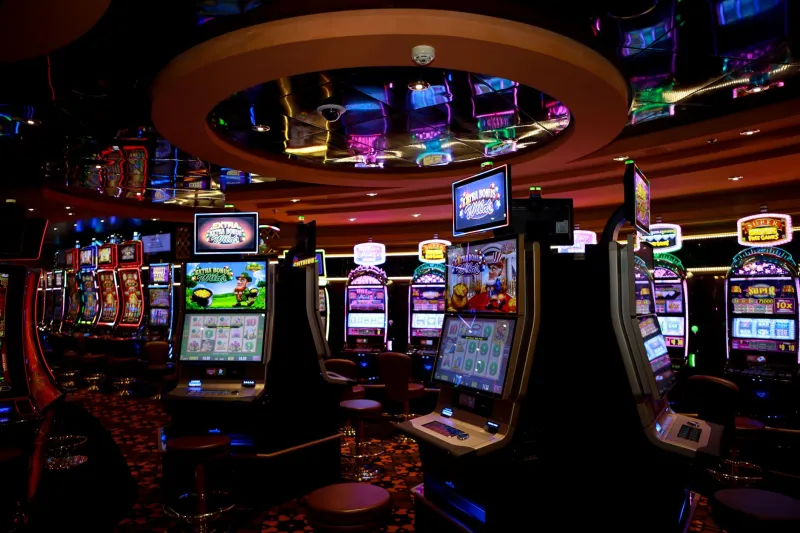
The same dynamic plays out in slot machine design. Modern video slots are loaded with near-miss engineering — configurations where two jackpot symbols land on the payline and the third stops just above or below. These near-misses are programmed at higher frequencies than pure random chance would produce. They create the visceral sensation of almost winning, which your pattern-recognition system interprets as evidence that a win is close.
It isn't. Each spin is statistically independent. But your brain doesn't care about that. It saw the pattern. It felt the almost. And it wants to try again.
Heat Maps, Hot Numbers, and Other Lies Your Dashboard Tells You
Online casinos have taken this further with visual tools that would have been impossible in a physical casino. Heat maps showing which roulette numbers have hit most frequently. Trend lines on baccarat results. "Hot" and "cold" slot machine indicators.
These are, without exception, statistically meaningless for predicting future outcomes in games of pure chance. A roulette number that has come up eight times in the last hundred spins is not more likely to come up on spin 101. The wheel has no memory. The algorithm has no memory. The only thing that remembers is you.
But the visual representation of those frequencies creates the powerful illusion of a pattern that can be exploited. And once your brain locks onto that illusion, it's incredibly hard to shake — even when you know, intellectually, that it's not real.
This is the gap that casinos live in: the space between what you know rationally and what your brain feels emotionally. You can understand the independence of random events completely and still feel the pull of a hot number. That's not stupidity. That's neuroscience.
Personalized Notifications: Pattern Exploitation Goes Algorithmic
The modern evolution of this exploitation is personalization. Sportsbook and casino apps now send targeted notifications based on your betting history — and those notifications are specifically engineered to trigger your pattern-recognition response.
"The Chiefs have covered in their last 5 home games — line just moved." "You've had success betting overs on Thursday night games." "This slot has paid out three jackpots this week."
Each of these messages is designed to make you feel like you've spotted something. Like you have insider context. Like the pattern you've been tracking is about to pay off.
What's actually happening is that the platform has identified the specific patterns you are most likely to respond to — based on your own betting history — and is serving them back to you at the moments you're most likely to be online and susceptible to acting. The algorithm isn't finding edges for you. It's finding your psychological buttons and pressing them.
How to Recognize When You're Being Pattern-Fooled
The goal here isn't to turn you into a robot who ignores all data. Pattern recognition is genuinely useful in sports betting when it's applied to structural edges — line movement, injury impact, situational handicapping. The problem is distinguishing real signal from manufactured noise.
A few practical checkpoints:
Ask for the denominator. A team covering seven straight games sounds significant. But if they've covered seven of their last seven, what's the full-season rate? What does the research say about the persistence of covering streaks? If you can't answer that, the streak is just a streak.
Treat near-misses as noise, not information. In any game of independent random events — slots, roulette, keno — a near-miss tells you exactly nothing about the next outcome. If you feel it telling you something, that's your apophenia talking. Acknowledge it. Don't bet on it.
Be suspicious of your own certainty. The stronger the pattern feels, the more worth examining it is. Genuine edges are usually subtle and require work to validate. Patterns that feel obvious and urgent are often the ones your brain manufactured.
Notice what the platform is highlighting. If a streak or trend is being surfaced prominently in your feed, ask why. Is this information that helps you find value? Or is it designed to generate action on a market the platform wants to move?
The Superpower, Redirected
Pattern recognition isn't something to suppress — it's something to redirect. In sports betting specifically, it can be genuinely valuable when pointed at the right things: market inefficiencies, line-setting tendencies at specific books, situational angles that have structural explanations.
The difference between a sharp bettor and an average one isn't that the sharp bettor has better pattern recognition. It's that they've learned to distinguish between patterns that reflect real-world structure and patterns their brain invented to feel in control.
The casino is counting on you not knowing the difference. At Breed77, we think knowing the difference is where the real game begins.