Winning Feels Like Skill Until the Math Catches Up With You
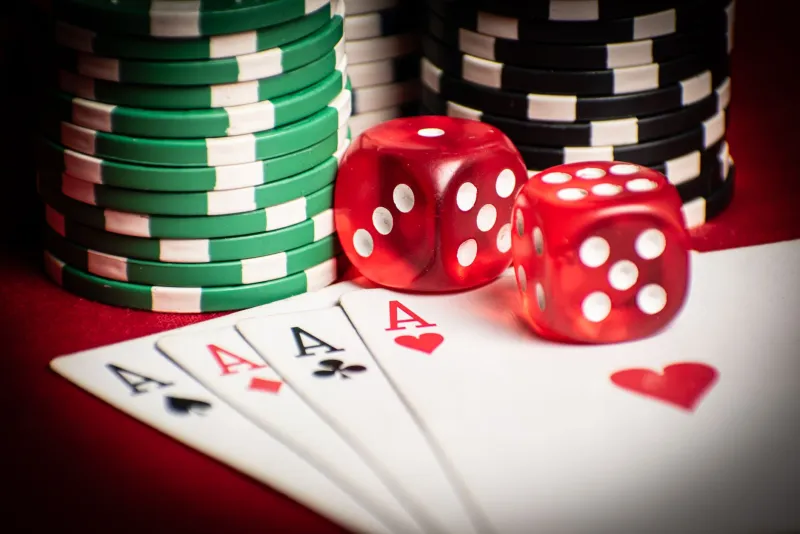
There's a specific kind of confidence that only shows up after you've hit four winners in a row. It's not arrogance exactly — it's quieter than that. It's the feeling that you've got a read on things, that your instincts are dialed in, that tonight is your night. Every bettor knows that feeling. And almost every bettor has let that feeling cost them money.
The cruel irony is that the sensation of being on a heater and the sensation of having a genuine edge are nearly identical in the moment. Your brain doesn't really distinguish between the two. That's not a character flaw — it's just how human cognition handles randomness. Spoiler: not great.
What Variance Actually Means (And Why It's Not Your Friend)
Variance is the word statisticians use to describe how much actual outcomes can deviate from expected outcomes over a given sample. In plain terms: even in a game where the house wins 55% of the time, you can absolutely go on a run where you win 7 out of 10 bets. That's not the universe correcting itself in your favor. That's just what randomness looks like up close.
Here's the thing about short samples — they lie. Not maliciously, but structurally. A coin flip is 50/50 over millions of tosses, but over ten flips, you can easily get 7 heads or 8 tails. Nobody would look at that and conclude the coin is rigged toward heads. But in a betting context? That same 7-out-of-10 run feels deeply meaningful. It feels like signal. It almost always isn't.
The house edge doesn't take a night off. It doesn't care that you're on a streak. It's a mathematical constant baked into the structure of every game, every line, every spin. What variance does is temporarily hide that edge behind a curtain of short-term results that look nothing like the long-run math.
Expected Value: The Number Behind the Feeling
Expected value — EV, if you want to sound like you know what you're talking about — is the average outcome of a bet if you ran it an infinite number of times. Most casino games and sportsbook wagers carry a negative expected value for the player. That means over time, playing them will cost you money. Not might. Will.
But here's where it gets psychologically messy: expected value is invisible in the short term. You can't feel it on a single bet. You can't see it during a three-hour session where you're up $400. EV only reveals itself across thousands of repetitions, which is a timeline that conveniently extends well beyond any single gambling session you'll ever have.
So when you're up, you're not seeing expected value — you're seeing variance doing its thing. The danger is that winning makes you feel like you've overcome the expected value, like your picks or your system or your read on the game has somehow tilted the math in your direction. That's the illusion. And it's a convincing one.
Why Your Brain Is Wired to See Patterns That Aren't There
Humans are pattern-recognition machines. It's one of our greatest evolutionary advantages and one of our worst cognitive liabilities in a gambling context. We are literally built to find order in chaos — to connect dots, identify streaks, and assign meaning to sequences.
Random outcomes don't look the way most people expect them to. Real randomness is lumpy. It clusters. It produces runs of wins and runs of losses that feel way too long to be coincidence. But they are coincidence. That's what randomness actually produces when you let it breathe across a large sample.
When you hit a hot streak, your brain does something called attribution bias — it assigns that success to something internal (your skill, your system, your read) rather than something external (luck, variance, sample noise). This is the same wiring that made our ancestors conclude that the rain came because they danced, not because weather systems are complex and somewhat random. It was useful then. At a blackjack table, it'll drain your bankroll.
The Moment the Streak Becomes Dangerous
A winning run becomes genuinely hazardous the moment you start treating it as evidence of edge rather than an expression of variance. That's when behavior changes in ways that quietly set you up for a bigger loss.
Maybe you start sizing up your bets because the wins keep coming and you feel invincible. Maybe you extend the session well past when you planned to leave because walking away from a hot table feels wrong. Maybe you start trusting your gut on bets you'd normally skip because your instincts feel sharp tonight. All of these are completely natural responses to winning. All of them are also how a $300 profit turns into a $200 loss by midnight.
The sharpest bettors aren't the ones who never run hot — everybody runs hot sometimes. They're the ones who recognize a heater for what it is: a temporary gift from variance that doesn't say anything meaningful about the next bet. They bank the wins. They don't renegotiate their strategy mid-session because things are going well. They treat a winning streak with the same emotional discipline they'd apply to a losing one.
Playing Bold Doesn't Mean Playing Delusional
At Breed77, we're all about playing bold — but bold and delusional are two very different things. Bold means making calculated decisions with confidence, sizing your bets in line with your bankroll, and trusting a well-reasoned strategy over the long haul. Delusional means letting a three-game winning streak convince you that you've unlocked some secret the math doesn't know about.
The gap between those two mindsets is where most gambling losses actually happen. Not at the point of a bad bet — at the point where a good run convinces you that the normal rules no longer apply to you.
Variance will always exist. Lucky sessions will keep happening, because that's what probability looks like from the inside. The question isn't whether you'll ever run hot. The question is whether you'll be clear-eyed enough, in the middle of that hot run, to remember that the math is still there — patient, indifferent, and waiting for the sample size to grow.
Bet smart. Know what a streak actually means. And never confuse the feeling of winning with the reality of having an edge.