The Most Profitable Bet You'll Ever Make Is the One You Walk Away From
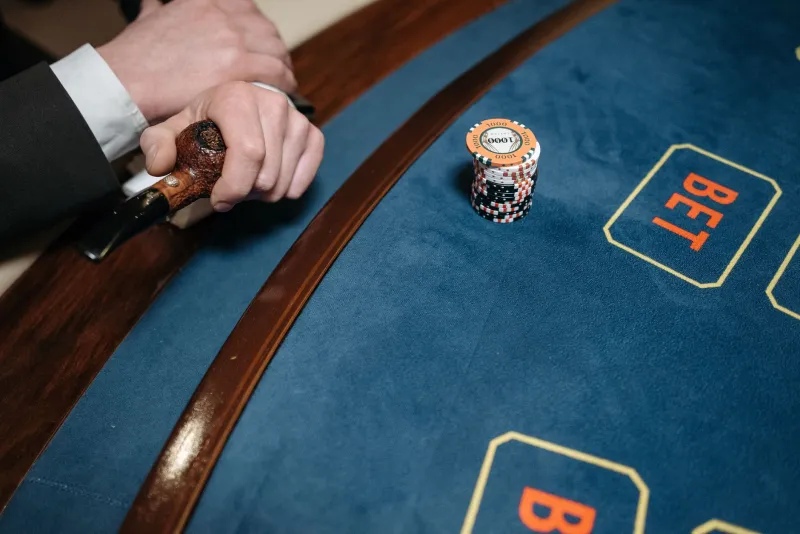
Here's a question most bettors never ask themselves: what did it cost you to not skip that bet?
Not in some philosophical sense — in actual dollars. When you placed that -110 wager on a game you were only mildly confident about, you didn't just risk losing the bet. You gave up every other thing that money could have done. You burned the option value of keeping it dry.
That's opportunity cost. And in gambling, it's the concept that separates recreational players from the people who actually protect their bankrolls over time.
What Opportunity Cost Actually Means at the Betting Window
Opportunity cost is a term from economics, but it applies directly to every single wager you place. At its core, it's simple: the cost of any choice includes what you gave up by not making a different choice.
In investing, this is intuitive. If you put $1,000 in a savings account earning 2%, the opportunity cost is whatever a smarter investment would have returned. People think about this constantly when it comes to their 401(k).
But at the sportsbook? That logic evaporates. Bettors almost universally think about the downside of a bet (losing) and the upside (winning), while completely ignoring the third option: not betting and preserving capital.
That preserved capital has real value. It's not just money sitting still — it's ammunition for better spots, insurance against variance, and flexibility to move when a genuine edge presents itself. The moment you put it on a mediocre play, all of that disappears.
The Cognitive Blindspot That Makes This Worse
Behavioral economists call it "loss aversion asymmetry" — the well-documented finding that people feel losses more acutely than equivalent gains. But there's a related blindspot that gets less attention: we're terrible at feeling the weight of foregone opportunities.
If you bet $200 and lose it, that loss is immediate, visible, and painful. If you didn't bet $200 on a spot that would have lost, you feel nothing — even though the outcome was identical. The money is in your pocket either way.
This asymmetry means that sitting out a bad bet never feels like a win, even when it absolutely is one. And that emotional accounting error compounds over an entire betting career in ways that are genuinely staggering.
Consider a bettor who averages 15 wagers a week at $100 each. If even five of those are low-conviction plays they could have skipped — plays where they'd expect to lose at the house edge — that's $500 a week in capital deployed at a negative expected value. Over a year, that's $26,000 run through the machine at a margin that favors the house.
The bets they skipped would have been their most profitable plays. They just never show up in any ledger.
How Professional Gamblers Actually Think About This
If you've ever read interviews with sharp sports bettors — the ones who actually sustain a long-term edge — one theme comes up over and over again: selectivity.
Professional gamblers don't bet every day. Many don't bet every week. They're waiting for spots where they believe they have a genuine, quantifiable edge over the posted line. Everything else is noise they deliberately tune out.
This isn't because they're not competitive or don't want action. It's because they've internalized something most recreational bettors never do: action without edge is just a donation.
The opportunity cost framework is baked into how they operate. Every dollar they deploy on a questionable spot is a dollar that's not available when a real edge surfaces. And real edges — lines that are meaningfully mispriced — don't come around constantly. When they do, you want to have capital available to press them.
Recreational bettors often do the opposite. They grind through a week of mediocre plays, then find a genuinely good spot and have nothing left to put on it.
The "I Need Action" Problem
Let's be honest about something. A lot of bets get placed not because there's a compelling reason to make them, but because the bettor wants to be involved. There's a game on, there's a live betting market open, there's a prop that looks interesting — and the pull toward action is strong.
This is completely human. Watching a game you have no money on feels different than watching one you're invested in. The emotional engagement, the stakes, the reason to care — betting manufactures all of that.
But that emotional need has a price tag. Every time you bet for engagement rather than edge, you're paying an entertainment fee that you've mentally reclassified as a strategic play. There's nothing wrong with betting for fun — as long as you're honest that's what you're doing and you've budgeted for it accordingly.
Where it becomes a problem is when entertainment bets get rationalized as smart plays. That's when the opportunity cost really starts adding up, because you're not just losing money — you're losing money while believing you had good reason to risk it.
A Practical Framework for Valuing Inaction
Here's a shift in perspective that some bettors find useful: treat every session with a fixed opportunity cost budget.
Before you sit down, decide how much capital you're willing to deploy only on plays you genuinely believe in. Then, for every bet you don't make because it doesn't clear your confidence threshold, log it as a win. Not just "I didn't lose" — actually record it as a positive decision.
This sounds small, but it rewires how you emotionally account for restraint. Over time, you start to feel the value of skipped bets instead of just the absence of action.
Additionally:
- Set a minimum conviction threshold. If you can't articulate in one sentence why you have an edge on this specific play, don't bet it.
- Track your skipped bets. Write down the plays you passed on and check the outcomes. You'll start to see how often your restraint was correct.
- Separate entertainment money from edge money. If you want action on a game, fine — but put it in a different mental bucket with a different budget. Don't let entertainment spending bleed into your serious bankroll.
- Think in terms of monthly capital efficiency. Not just win/loss, but how much of your bankroll was deployed on plays that cleared your own edge threshold versus plays that didn't.
The Bet That Doesn't Happen Is Still a Result
At the end of a session, most bettors look at their P&L and feel good or bad based on what they won or lost. The professional lens adds a third column: capital preserved by not betting.
That column is invisible in most tracking tools. It doesn't show up as a win in your app. But over a full year of betting, it might be the most important number on the page.
The bets you walk away from are the ones that never drain you, never fuel a tilt spiral, and never eat the capital you needed for the play that actually made sense. That's not passive. That's discipline with a return on investment.
Play bold when the spot is right. The rest of the time, the boldest move is putting your wallet back in your pocket.